To repair your skin barrier, you need to stop the inputs that are degrading it and replace the lipid building blocks it needs to rebuild. The skin barrier — the outermost layer of skin cells and lipids — repairs itself when the conditions are right. Creating those conditions requires two things: reducing what is working against the barrier, and delivering the fatty acids and ceramides it needs to rebuild its structure. Neither step works without the other.
Barrier repair is not fast. It takes a minimum of four to six weeks of consistent, appropriate care to produce meaningful improvement. But it works — and for the majority of people with chronically dry, reactive, or sensitive skin, barrier repair is the intervention that produces lasting results when everything else has not.
What causes skin barrier damage
The most common causes of barrier damage are the ones that seem counterintuitive: cleansing too frequently or with stripping formulas, using alcohol-based toners, applying high concentrations of actives (retinol, AHAs, BHAs) on skin that is not ready, and prolonged environmental exposure — air-conditioning, UV, and high-pollution environments like Kuala Lumpur.
The barrier is a lipid structure — fatty acids, ceramides, cholesterol — that holds the outermost skin cells together and prevents water loss. Any input that strips lipids compromises the barrier. Alcohol strips them directly. Surfactants in cleansers strip them temporarily. Over time, repeated disruption without adequate recovery depletes the barrier faster than it can repair itself. The skin becomes increasingly reactive, tight, and prone to flare.
The difference between patching the barrier and repairing it
Patching means temporarily coating the skin surface to reduce visible symptoms — dryness, redness, flakiness — without addressing the structural deficit. Most conventional moisturisers patch. They feel good immediately but the skin returns to its compromised state within hours. Repairing means delivering the lipid components that the barrier needs to rebuild its own structure.
The distinction determines which products produce lasting improvement. An occlusive moisturiser patches. A serum high in linoleic acid and barrier-compatible botanical oils repairs. In practice, the two approaches work together: repair with a fatty-acid-rich botanical serum, then patch with an occlusive to seal in the work while it takes effect.
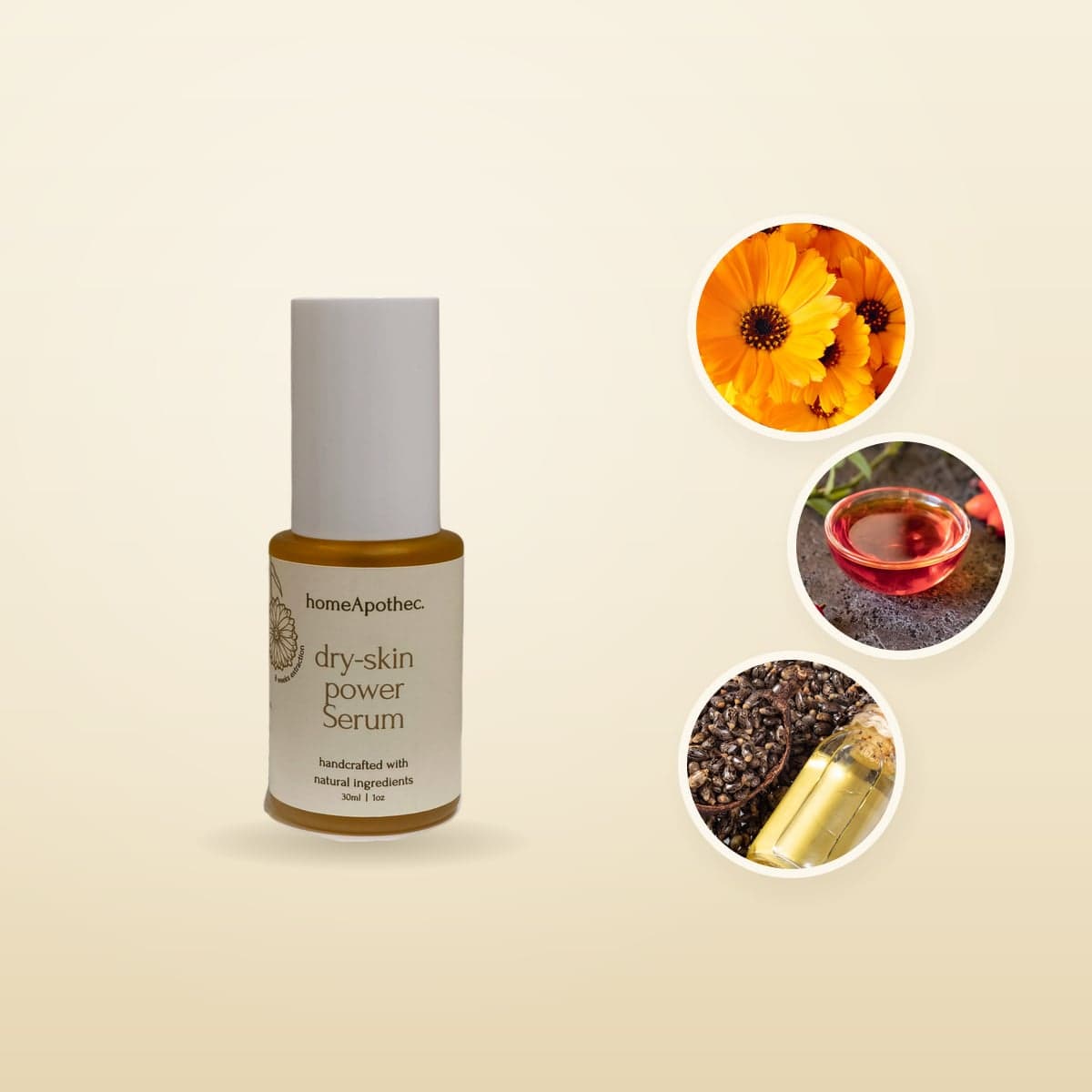
Dry Skin Power Serum
The homeApothec Dry Skin Power Serum is formulated for barrier repair — high-linoleic botanical oils in an 8-week cold maceration base that rebuilds the lipid layer from within.
View product →
Which ingredients actually repair the skin barrier
The most effective barrier-repairing ingredients match the barrier's own lipid composition: linoleic acid (rosehip, safflower, evening primrose oil), ceramide precursors (oat kernel oil), and squalane — a skin-identical lipid that integrates into the barrier without causing congestion. These ingredients restore the barrier's structural material rather than sitting on top of it.
Soothing botanicals — calendula, chamomile, yarrow — do not repair the barrier directly, but they help calm the look and feel of irritated skin while it does its own repair work. Both roles matter: comfort now, structure over time.
Ingredients to avoid during barrier repair: alcohol in any form, synthetic fragrance, physical exfoliants, high concentrations of retinol or AHAs. The barrier repair phase is a pause on actives. It is temporary — but consistent.
A practical barrier repair routine
Morning: cleanse gently, apply a water-based hydration serum while skin is still damp, follow with an oil-based barrier serum. SPF over the top — UV exposure depletes the barrier independently of everything else. No actives.
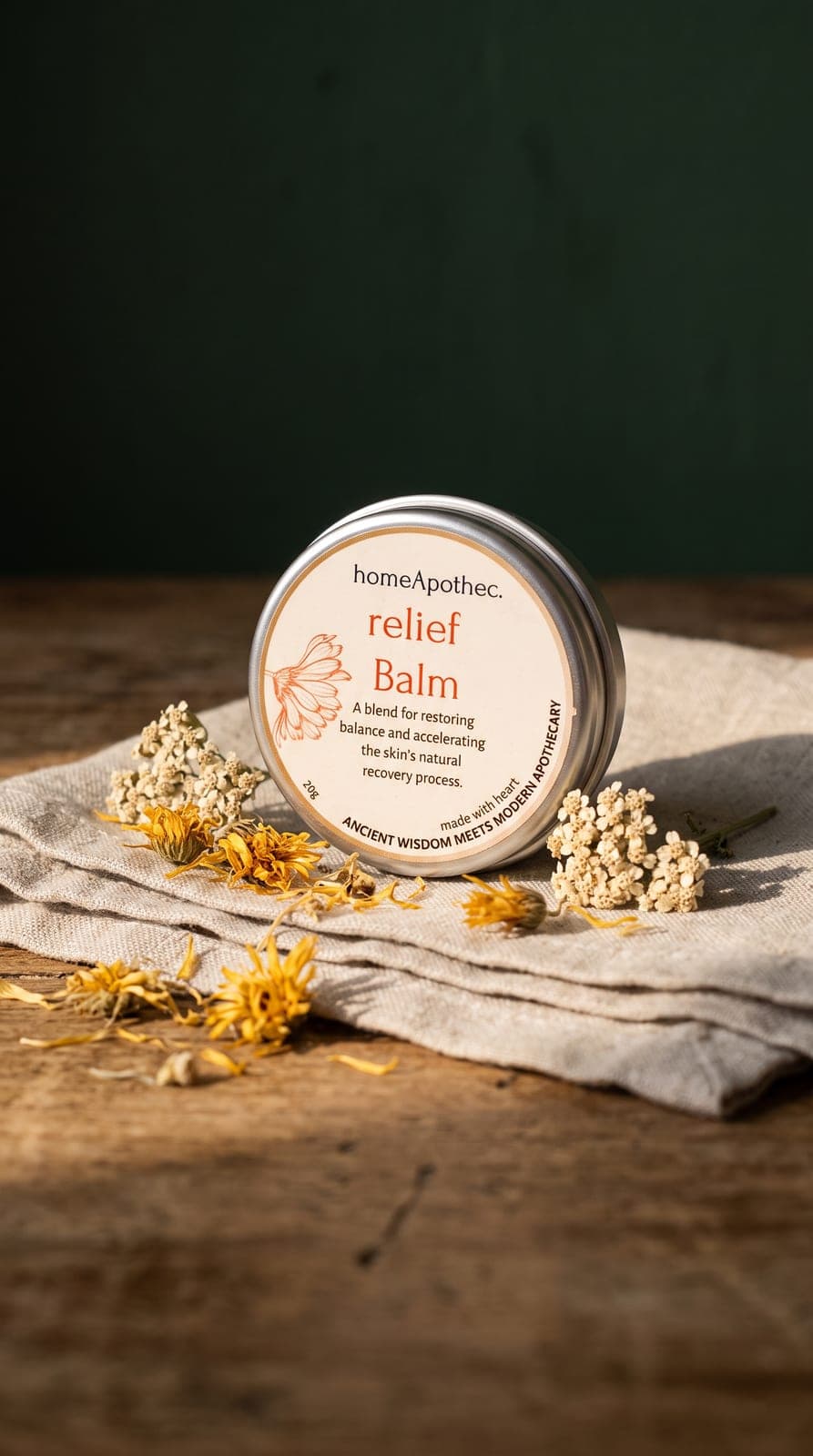
Night: same gentle cleanse. Oil-based barrier serum applied generously. An occlusive balm on any particularly compromised areas — eczema patches, cracked skin, reactive zones. Let the skin recover overnight.
The routine is simple by design. Barrier-compromised skin benefits from fewer inputs, not more. Every additional product is a potential trigger. Strip back to what actively repairs, and allow the skin time to do the rest.
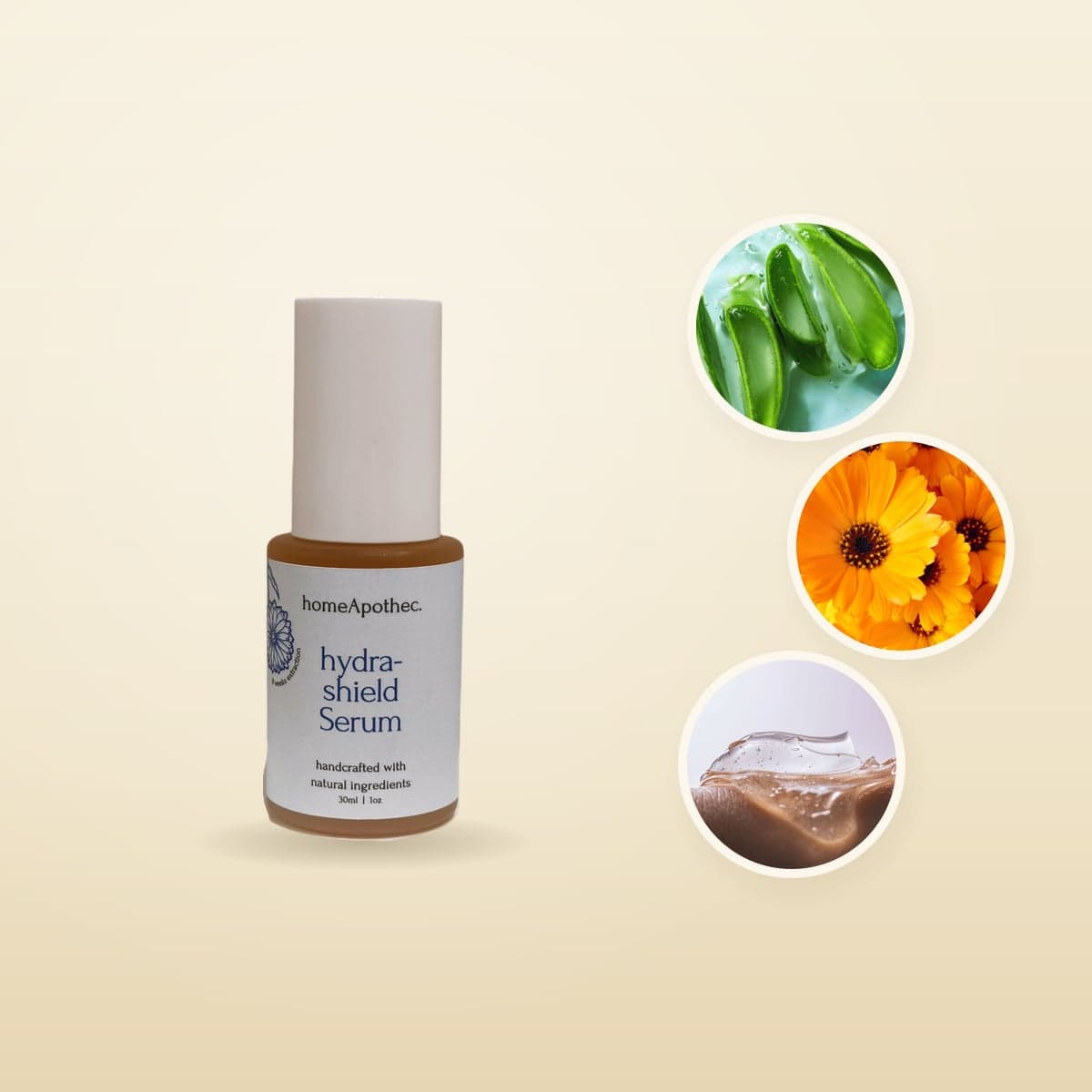
HydraShield Serum
The homeApothec HydraShield Serum provides the water-based hydration layer before the oil serum — important for skin that is simultaneously dehydrated and barrier-damaged.
View product →
Common questions
Questions answered
Still not sure what your skin needs?
Ask Tracy on WhatsApp →