An 8-week botanical infusion is a cold maceration process in which plant material is submerged in a carrier base — in homeApothec's case, a glycerite — and left to infuse without heat for eight weeks. The result is a botanical extract that preserves heat-sensitive plant compounds that standard extraction methods destroy. It is slower than industry-standard methods by a factor of weeks, and it produces a more active, more complete extract.
The reason the timeline matters is chemistry. The plant compounds that make botanicals worth using in skincare — phenols, flavonoids, volatile actives — are the same compounds most sensitive to heat. Industrial botanical extraction uses heat because it is faster and cheaper. Cold maceration exists because speed is the enemy of what it is trying to preserve.
Why standard botanical extraction damages what it extracts
Most botanical extracts in commercial skincare are produced through heat extraction — boiling, steam distillation, or high-pressure processes that take hours rather than weeks. This works in the sense that it produces a liquid with plant material in it. The problem is temperature. The compounds most responsible for the soothing, barrier-supporting, and skin-calming effects of botanicals are the most thermally fragile. Heating calendula destroys a portion of its flavonoids. Heating chamomile degrades its bisabolol. Heating rosehip reduces its vitamin A content.
The result is an extract that retains the plant's colour and scent but has lost a significant portion of its functional activity. Skincare brands still use this approach because the output is faster, cheaper, and the consumer cannot see the difference at the point of purchase. The difference shows up on the skin over time — or rather, does not show up.
What cold maceration preserves that heat cannot
Cold maceration works by allowing time to do what heat accelerates. Plant material is submerged in the carrier at room temperature and left for weeks. Compounds migrate into the carrier gradually, completely, and without thermal degradation. The resulting extract is richer in heat-sensitive actives — particularly the phenolic compounds that give soothing botanicals their skin-calming properties.
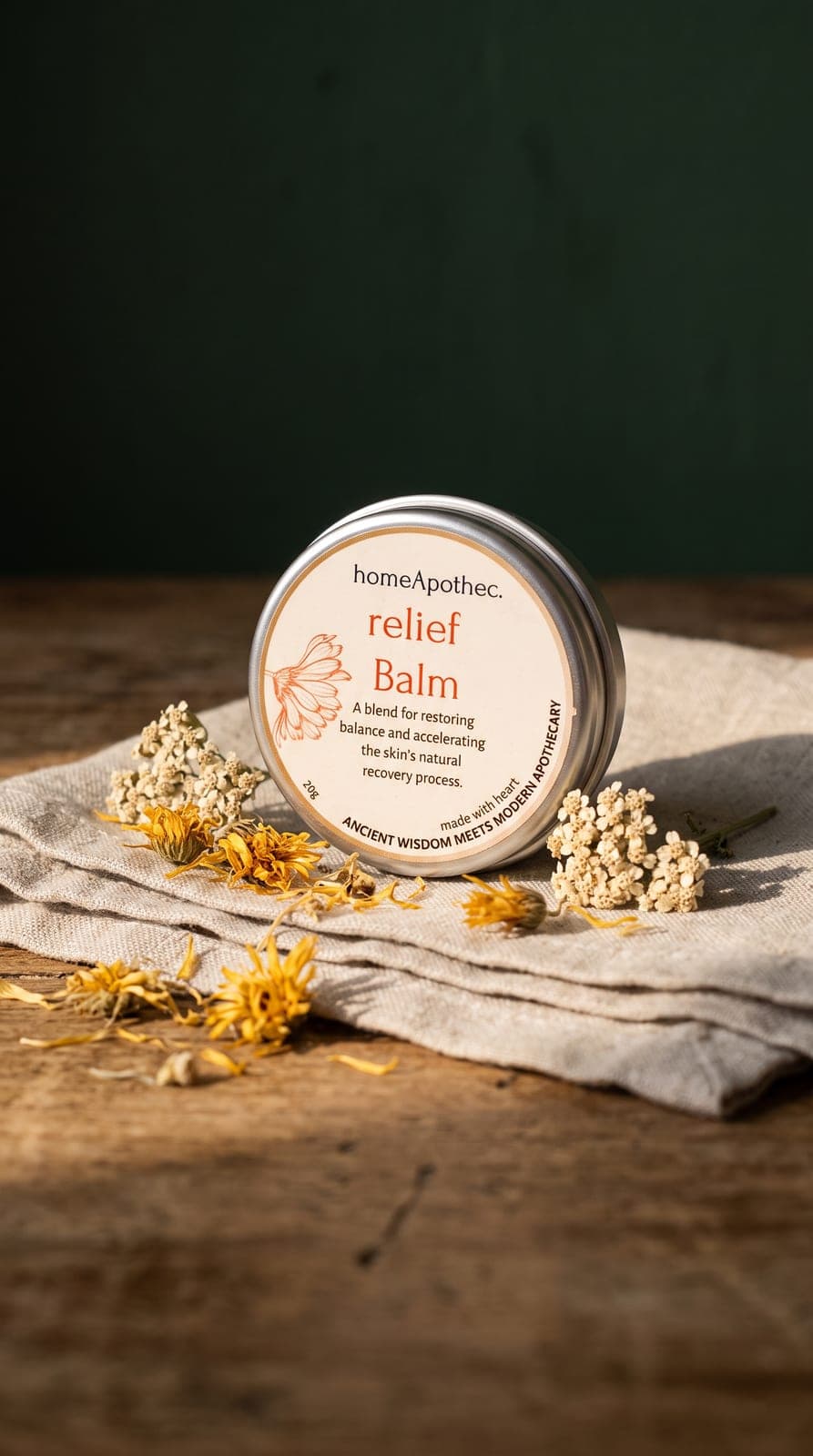
Eight weeks is not an arbitrary number. Research on cold maceration extraction efficiency shows that maximum compound transfer from plant to carrier requires sustained contact time — typically six to ten weeks depending on the plant material. The 8-week period represents the minimum time for complete transfer of active compounds from calendula, chamomile, and yarrow into the glycerite base.
Why glycerite and not oil or alcohol
A glycerite means the carrier base is glycerin — a plant-derived humectant — rather than oil or alcohol. The choice matters for two reasons. First, glycerin is skin-compatible: it draws moisture into the skin rather than stripping it. Second, alcohol — even food-grade alcohol used in conventional tinctures — is a known skin irritant at concentrations sufficient for extraction. For products formulated for compromised, sensitive, or eczema-prone skin, alcohol as a carrier directly contradicts the purpose.
A glycerite infusion is also more stable on the skin than an alcohol-based extract. It does not evaporate rapidly, does not cause transient burning in sensitised skin, and the glycerin base itself contributes to skin hydration while the botanical actives do their work.
What the infusion process means for the finished product
Every homeApothec formula starts with botanicals that have completed the full 8-week cold maceration process. This is not a marketing claim — it is a production constraint. A new product cannot go from concept to finished formula in under eight weeks because the botanical base does not exist until the infusion is complete.
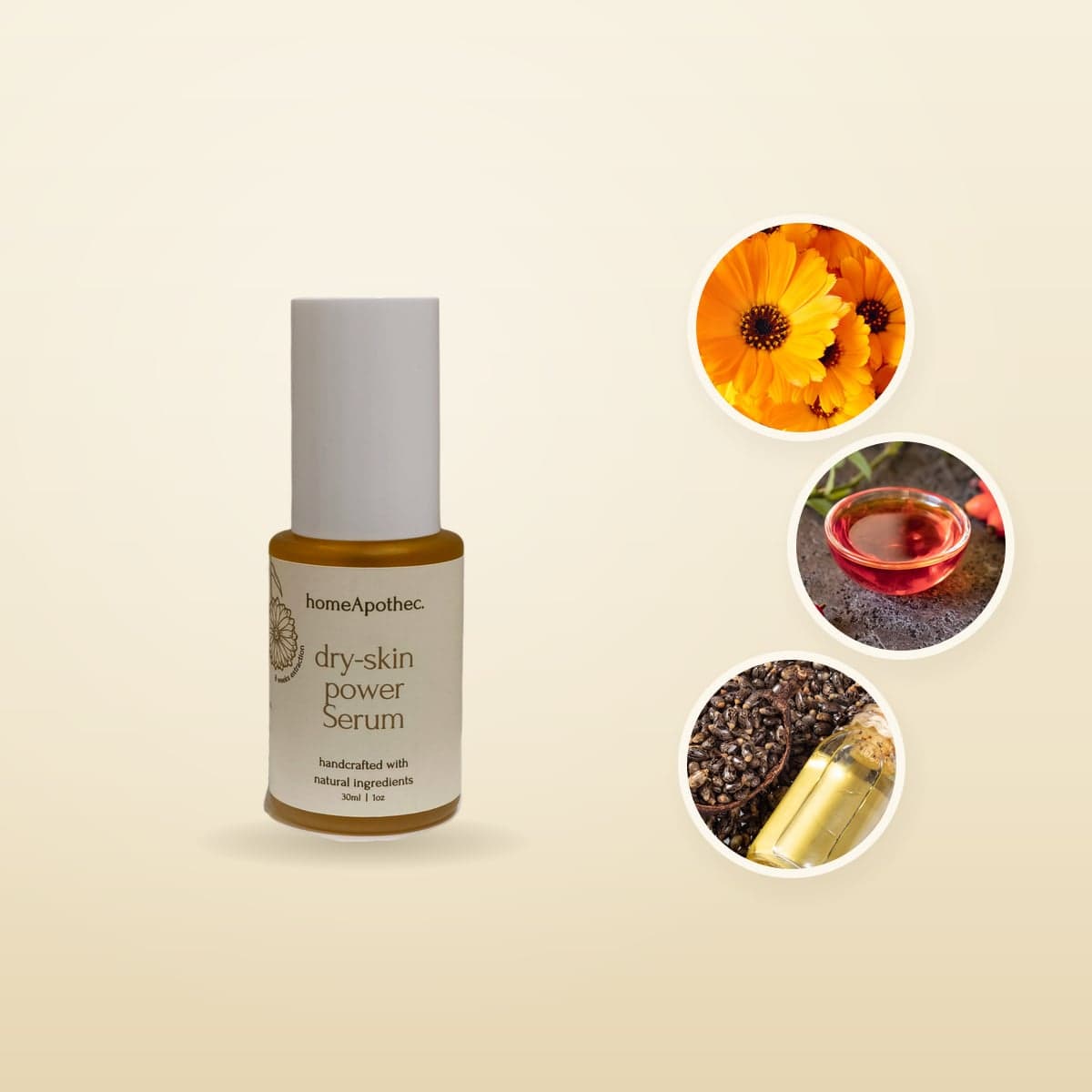
The practical result: a serum or oil containing botanicals at their maximum functional activity, in a carrier gentle enough for the most reactive skin. The calendula in the Dry Skin Power Serum is not a trace ingredient listed for marketing purposes. It is a fully infused botanical extract that took eight weeks to prepare.
Dry Skin Power Serum
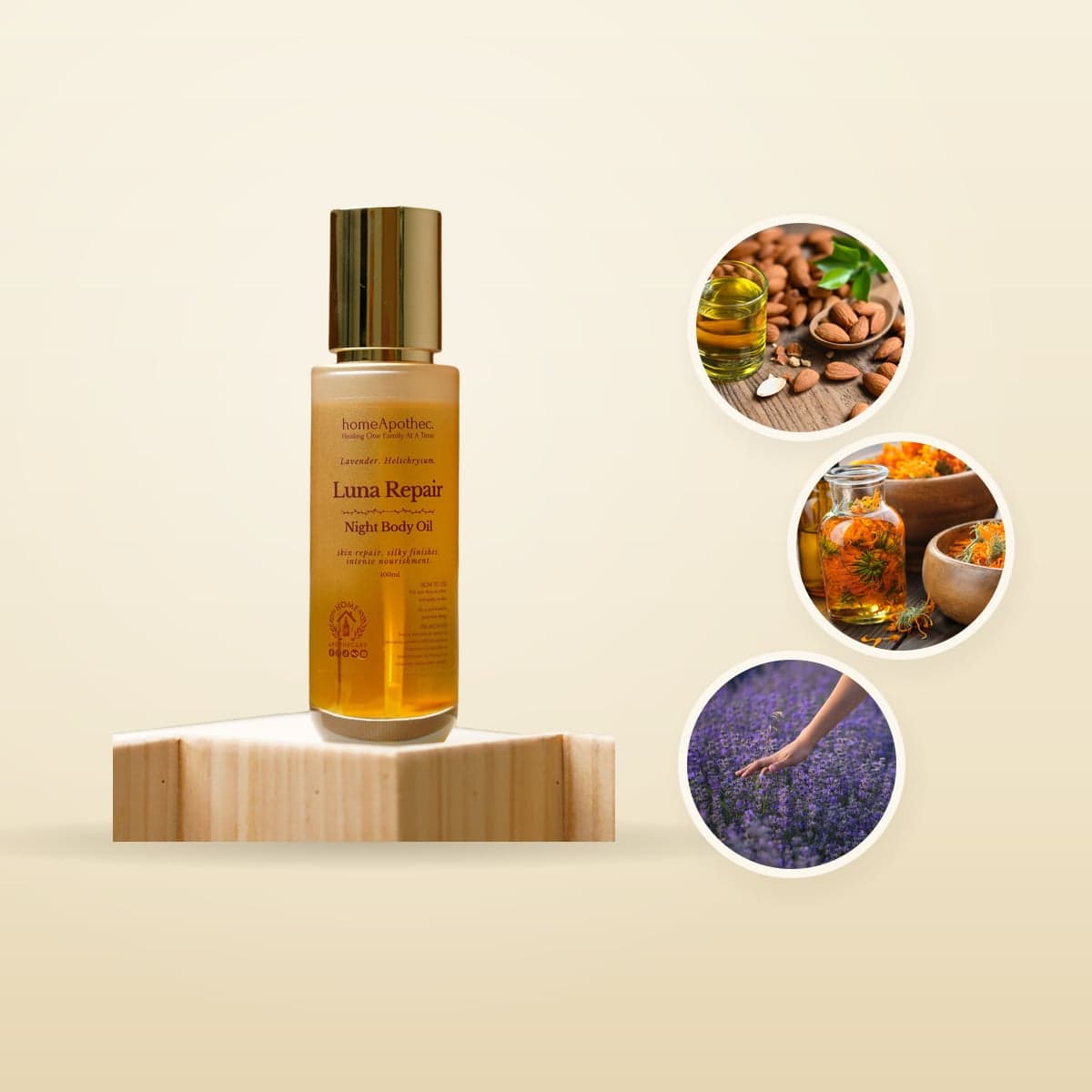
Every homeApothec formula is built on botanicals extracted through the 8-week cold maceration glycerite process. The Dry Skin Power Serum and Luna Repair Night Body Oil both use the same infusion base.
View product →
Common questions
Questions answered
Still not sure what your skin needs?
Ask Tracy on WhatsApp →