Dry skin and dehydrated skin feel similar but have different causes, and need different solutions. Dry skin is a skin type — the skin produces less sebum than average, which means the lipid layer is naturally thinner. Dehydrated skin is a condition — the skin lacks water, which can affect any skin type, including oily skin. Using the wrong product for the wrong problem does not help, and can make things worse.
The confusion comes from the skincare market using 'dry' and 'dehydrated' interchangeably. The result is predictable: dry skin types receive water-based products that do not address their lipid deficit, and dehydrated oily skin gets rich creams that block pores while the water deficiency continues.
How to tell if your skin is dry or dehydrated
Dry skin: feels tight and rough consistently. Pores are small or barely visible. The skin produces little natural oil. It often reacts to new products. It has felt this way since adolescence — it is a consistent skin type characteristic, not a recent development.
Dehydrated skin: can appear suddenly after illness, travel, extended air-conditioning exposure, or a climate change. It can coexist with oily or combination skin — shine and tight, dull texture at the same time. A characteristic sign of dehydrated skin is that it looks slightly flat, fine lines appear more visible, and water-based products absorb immediately rather than sitting on the surface.
A simple self-test: gently pinch a small area of cheek skin and hold briefly. If the skin bounces back slowly and looks slightly crepey, dehydration is likely. If the skin looks normal but still feels tight and rough, the issue is more likely dry skin type.
Why a dehydrated-skin routine makes dry skin worse
Dry skin needs lipids — fatty acids and plant oils that replace the sebum a dry skin type does not naturally produce in sufficient amounts. Applying water-based serums and humectant moisturisers to dry skin provides temporary surface hydration that evaporates within hours. The lipid deficit goes unaddressed. The skin returns to its tight, uncomfortable baseline.
Dehydrated skin needs water and water-binding ingredients — sodium hyaluronate, glycerin, aloe vera, panthenol. Applying rich oil-based creams to dehydrated oily skin addresses the wrong problem: pores occlude while the water deficiency continues. The oiliness often continues or worsens because sebum overproduction is partly a compensatory response to dehydration — when the skin senses low water content, it produces more oil in an attempt to slow water loss.
What dry skin actually needs
Caring for dry skin is fundamentally about delivering lipids — the natural oils a dry skin type does not produce enough of. The most effective products for dry skin are oil-based serums containing high-linoleic and oleic botanical oils: rosehip, jojoba, argan, sweet almond. These integrate into the skin's lipid layer rather than sitting on the surface.
A note specific to Malaysia's climate: dry skin in Malaysia's heat and humidity behaves differently from dry skin in colder climates. Heavy occlusive creams can feel suffocating in Malaysian weather. A botanical oil serum — light enough to absorb but lipid-rich enough to repair — suits the climate better than the heavy moisturisers typically associated with dry skin management.
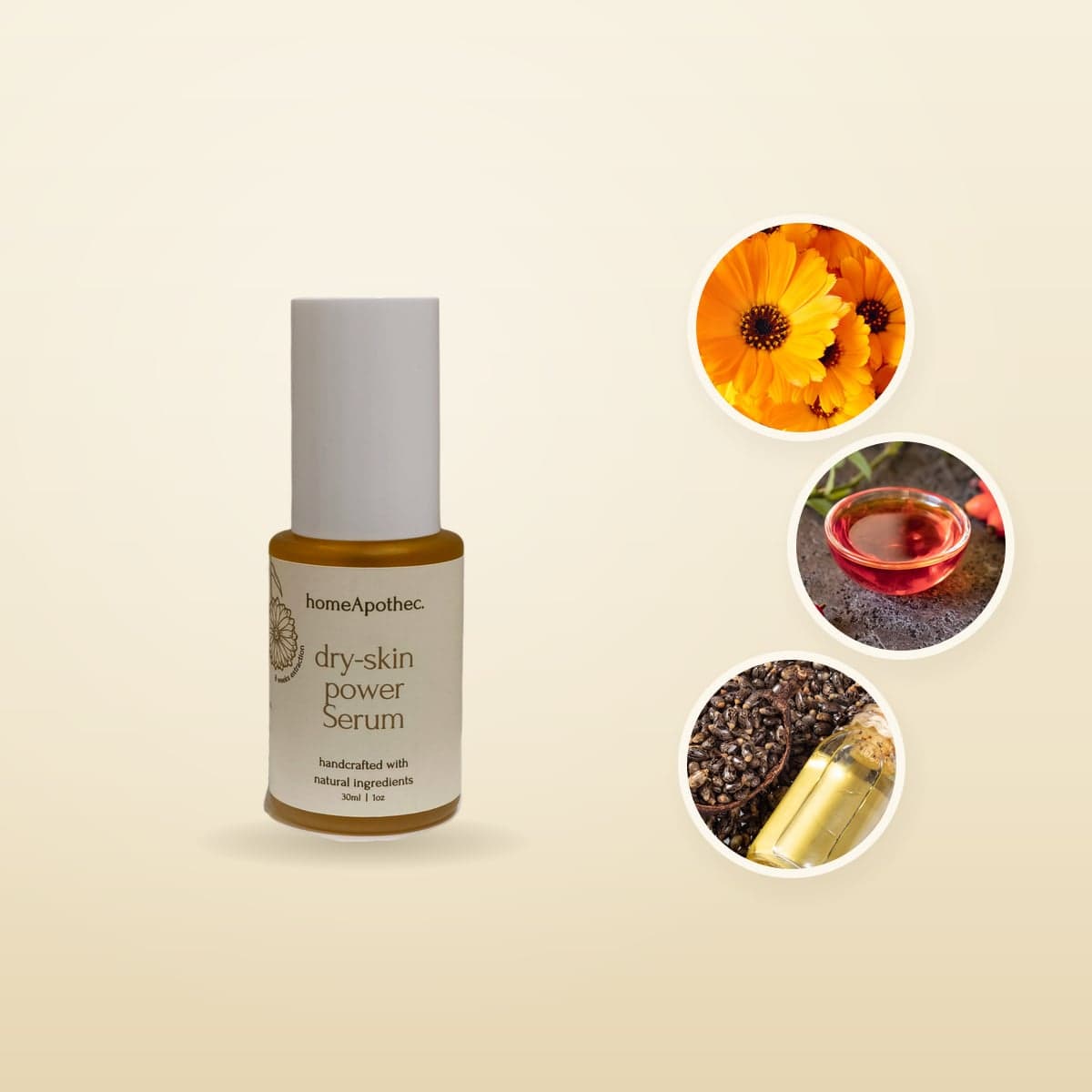
Dry Skin Power Serum
The homeApothec Dry Skin Power Serum is formulated for chronically dry skin — high-linoleic botanical oils in an 8-week cold maceration base, light enough for Malaysia's climate.
View product →
What dehydrated skin actually needs
Caring for dehydrated skin is fundamentally about water retention. Humectant ingredients — sodium hyaluronate (hyaluronic acid), glycerin, aloe vera, panthenol — draw water into the skin and hold it there. Timing matters: humectant serums work best applied to damp skin immediately after cleansing, before the surface dries. They draw moisture from the water on the skin's surface deeper into the skin rather than from air, which in air-conditioned environments may not provide enough ambient humidity.
For dehydrated oily skin specifically, a water-based hydrating serum applied before any oil-based products provides the missing water layer without adding to congestion. This is the correct layering order: water-based humectant serum first, then lighter oil-based serum on top.
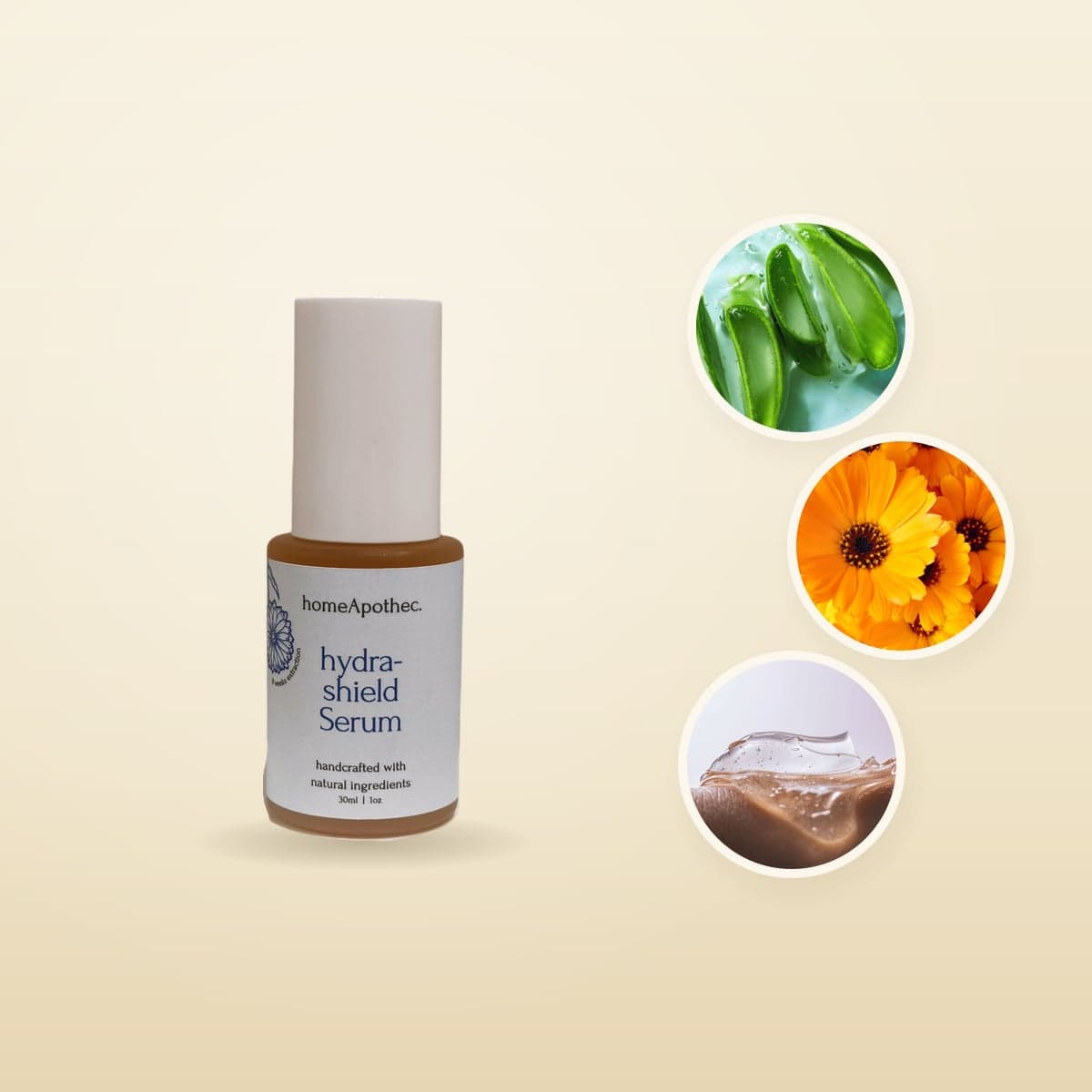
HydraShield Serum
The homeApothec HydraShield Serum is a water-based hydration serum for dehydrated skin — alcohol-free, essential-oil-free, and formulated for skin that needs water, not more oil.
View product →
Common questions
Questions answered
Still not sure what your skin needs?
Ask Tracy on WhatsApp →